.
This is the medieval section of StormTheCastle.com

- Knights
- Castles
- Games
- Weapons/Armor
- Articles
- Medieval Names
- Medieval Words
- Medieval Terms
- Medieval Jobs
- Medieval Maps
- The Armory

Wills Books

Suits of Armor at the Worcester Art Museum
This armor used to be on display at the Higgins Armory in Worcester. That museum closed and many of the items, including the suits of armor, were inherited by the Worcester Art Museum
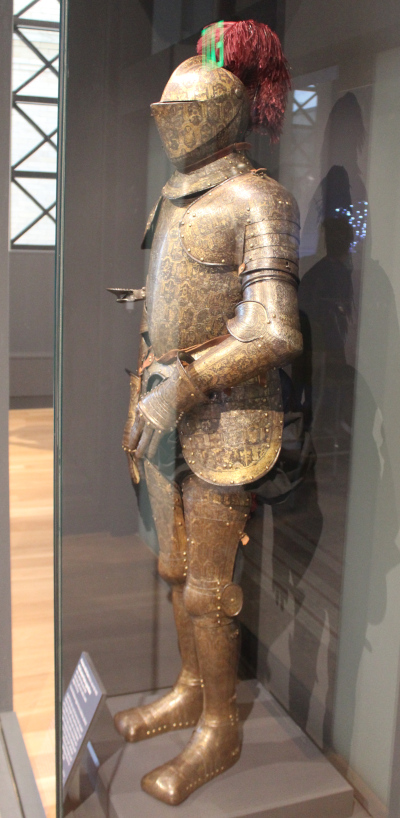
This first one, in my opinion is the most beautiful one they have on display.
Pompeo della Cesa (Italian, about 1537-1610)
Field Armor from a garniture
Milan, Northern Italy about 1595
Steel, brass, gold, silver, leather, textile
Weight 47 lbs. 15 oz.
A garniture was a suit of armor that included "pieces of exchange" that could be traded in and out to adapt
it for various uses.
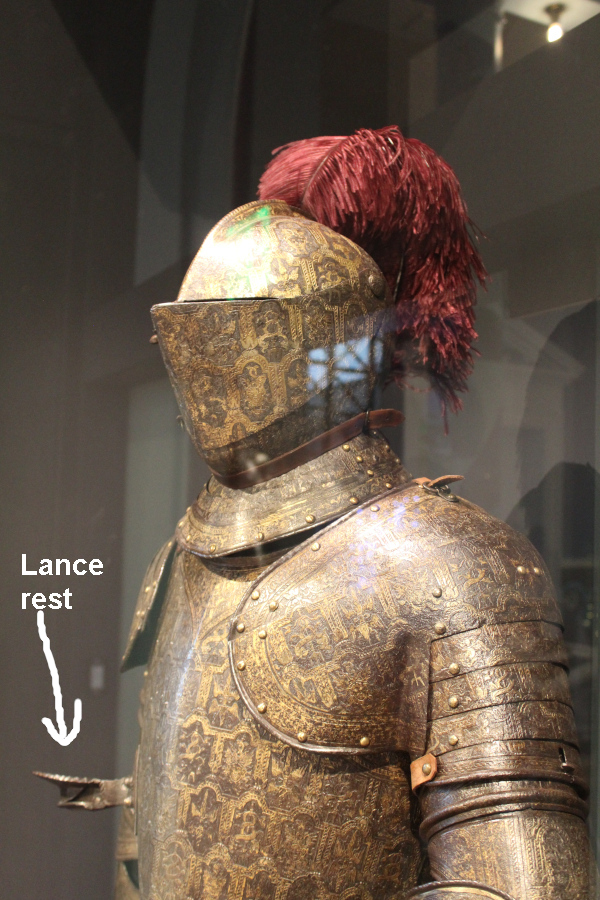
As displayed this armor is for heavy cavalry, horsemen who specialized in charging the enemy, attacking with a spear braced
on the "lance-rest" attacjed nmear the right armpit.
Pieces of exchange could reconfigure the armor for fighting on foot or for various forms of tournament combat.
Although fully usable in battle, this suit is also a fashion statement. The shape of the breastplate imitates a man's civilian jacket, and the etched and gilt surface resembles the patterned silks and velvets of stylish clothing. The designs derive from ancient Roman art, connectin the wearer with the culture of classical antiquity.
In the second picture I have placed an arrow that shows you the lance rest.
This armor comes out of northern Germany betwee 1550-1575 It is called Armor for the Plankengestech (The Joust over the Tilt) It is steel with etching and blackening, with brass, modern leather and restorations. And it weighs a whopping 64 pounds and 6 ounces
Consectetur adipisicing elit. Praesentium magnam consectetur vel in deserunt aspernatur est reprehenderit sunt hic. Nulla tempora soluta ea et odio, unde doloremque repellendus iure, iste.
Armor wasn't just for combat and jousting
Sometimes armor was made for beauty, looks and prestige. This type of armor is called ceremonial armor. It would be much more embellished and much less functional
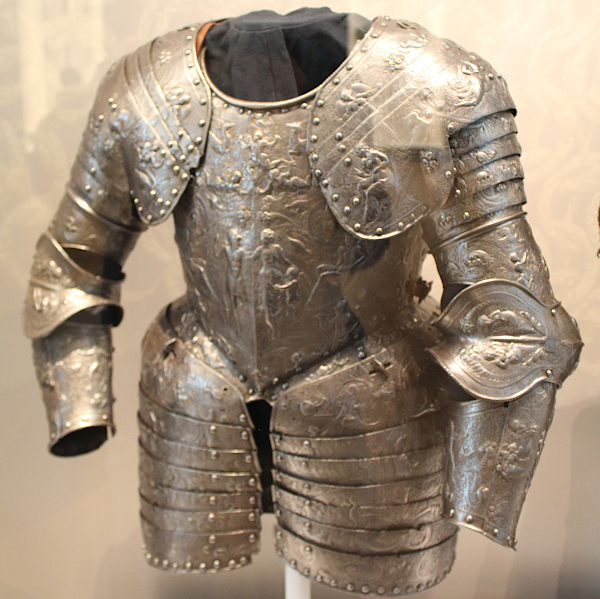
This next piece of armor is ceremonial armor. It came out of France in te 1580's and was modified in the early 1600's. It is made of steel with traces of gilding; modern leather. And it weighs 19 pounds and 10 ounces. The steel is thinner than your average suit of armor which weakens it and the hammering it took to emboss it with the motif would further weaken it. It wasn't needed to be strong.
One Let's look at one last set of armor.
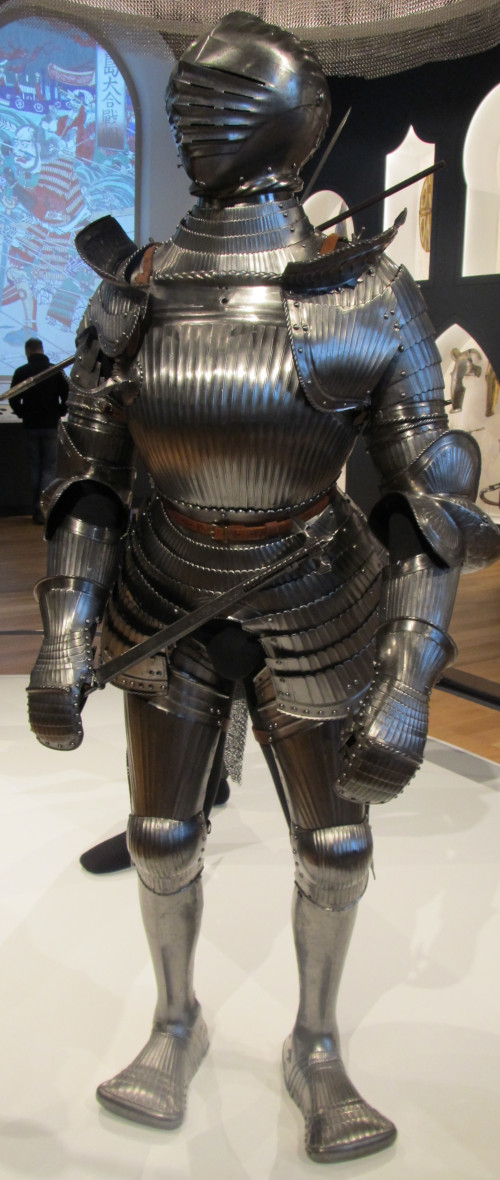
This one is a sort of hybrid between the purely functional armor and the ceremonial armor.
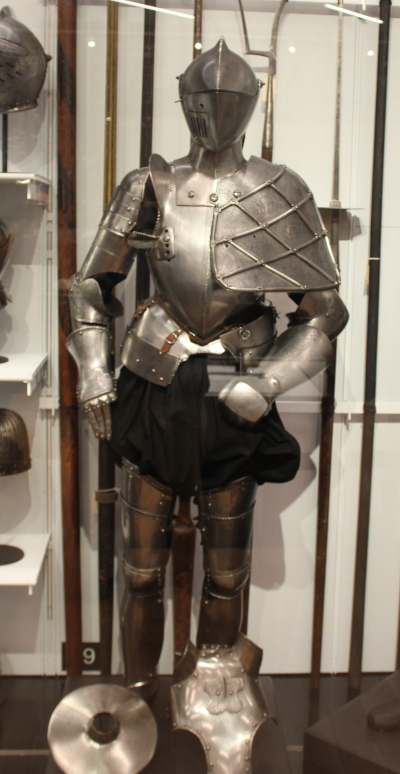
This is a battle worthy set of armor. One of the indicators of this is that it weighs 64 pounds and 14 ounces. But it also has some ornamental aspects to it. The vertical ribbing has some protective qualities but it also stylish in that it mimics the rich pleated fabrics of nobility. And the smooth quality of the leggings is suggestive of silk stockings. The broad-toed sabatons (feet) echo the shape of fashionable footwear of the time.
It is Maximilian field armor and it comes out of southern Germany around 1525-30.
King Arthur Medeival short sword dagger - Medieval Chainmail Coif - DaVinci's Battalion